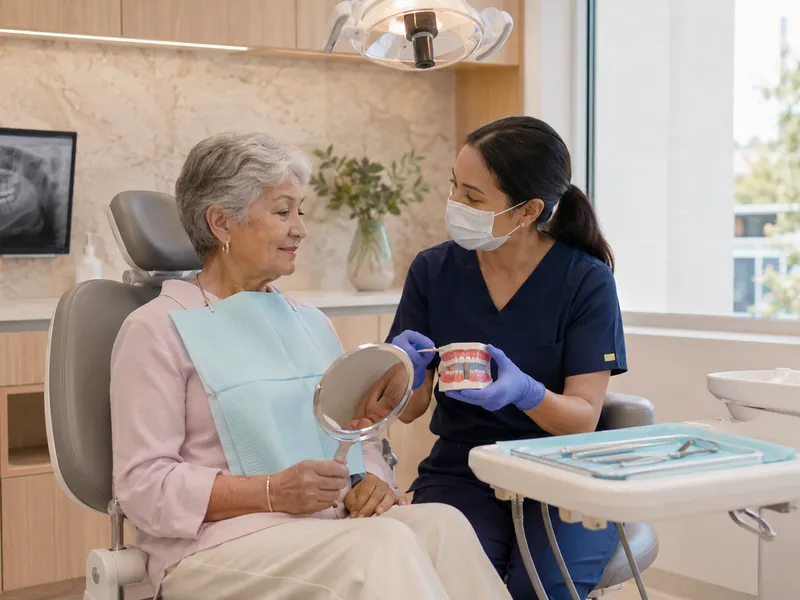
A partial denture fills one or more gaps while keeping the remaining natural teeth. It can be a relatively simple acrylic appliance or a carefully designed metal framework that distributes support across several teeth, and flexible materials are another option, though they are not suitable for every mouth or every repair. This guide uses general information from Healthdirect and explains the main designs without treating one material as right for everyone. Remaining teeth, gums, bite and the shape of the gap need to be assessed before a provider can recommend a design, and this page is general information only, not dental advice.
What is a partial denture?
A partial denture is a removable appliance that replaces some missing teeth. It rests on the gums and may use clasps, rests or other components on natural teeth for support and retention.
It can replace front teeth, back teeth or a combination. Alternatives may include leaving the gap, a fixed bridge or dental implants, and the provider should explain what each option would mean for the remaining teeth and long-term maintenance.
Acrylic, cobalt-chrome and flexible types
Material does not decide quality by itself. The design, fit, bite and health of the supporting teeth matter, so ask why a material is being proposed and what happens if another natural tooth is later lost.
- Acrylic
- Usual structureAcrylic base with replacement teeth and possible wire clasps
- Practical points to discussOften lower initial cost, can be bulkier and may be easier to add teeth to
- Cobalt-chrome
- Usual structureThin metal framework with acrylic and replacement teeth
- Practical points to discussCan be thinner, design depends heavily on suitable remaining teeth
- Flexible
- Usual structureFlexible thermoplastic base
- Practical points to discussAppearance and flexibility may appeal, but adjustment, repair and support vary
| Type | Usual structure | Practical points to discuss |
|---|---|---|
| Acrylic | Acrylic base with replacement teeth and possible wire clasps | Often lower initial cost, can be bulkier and may be easier to add teeth to |
| Cobalt-chrome | Thin metal framework with acrylic and replacement teeth | Can be thinner, design depends heavily on suitable remaining teeth |
| Flexible | Flexible thermoplastic base | Appearance and flexibility may appeal, but adjustment, repair and support vary |
Upper and lower partial dentures
An upper partial can use parts of the palate for support. A lower partial must fit around the tongue and has a different shape, and the location of remaining teeth and the movement of the tissues also affect design.
A photograph of an upper or lower denture cannot show whether that shape will fit another person. Custom records and a trial are needed.
Fitting and adjustment
The provider examines the mouth and may take X-rays before planning. Decay, gum disease or teeth with a poor outlook may need to be considered before the denture is made.
The process can include impressions or scans, bite records, a trial stage and final fitting. A new partial denture may affect speech, chewing and saliva while the mouth adjusts, and follow-up appointments allow sore areas and the bite to be checked.
Do not bend clasps, file the base or use household glue. Small changes can alter the forces on the remaining teeth and make professional repair harder.
Cleaning and care
Healthdirect advises removing dentures for cleaning and using a soft brush with mild soap and water because toothpaste can scratch denture surfaces. It also recommends taking dentures out overnight.
Natural teeth supporting a partial denture need careful cleaning around clasps and contact areas. Ask the provider to demonstrate the method and name the cleaning products suitable for the exact material.
Common problems
Arrange a review for persistent sore spots or ulcers, a loose or rocking denture, a clasp that feels different, food collecting around the appliance, a crack or broken replacement tooth, a change in the bite, or decay, bleeding or swelling around supporting teeth.
A repair may solve the immediate break, but the provider should also check why it happened.
What do partial dentures cost?
Published Australian price guides put an acrylic partial denture at roughly $900 to $1,800, a flexible partial denture at roughly $1,000 to $2,500, and a cobalt-chrome partial denture at roughly $1,600 to $2,800.
These are not quotes or national averages, and the evidence behind them is thin: no Australian fee survey or government dataset publishes partial denture prices broken down by material. The number of missing teeth, framework design, extractions, appointments and future additions all affect the fee.
If a quote sits noticeably above these figures, it is fair to ask which part of the design accounts for it, and whether a simpler design would do the same job for your mouth.
Finding a provider
Dentists and registered dental prosthetists may provide denture services within their respective scopes. Check registration through Ahpra.
Before treatment, ask why the material and design are proposed, which remaining teeth provide support, whether a try-in and adjustments are included, how repairs or added teeth are handled, what alternative treatments are available, and what future reviews cost.
Find denture clinics near you
Dentist360 lists practices across NSW, Queensland, the ACT and Melbourne, with opening hours, health funds and accessibility compared side by side.
Frequently asked
Eating often takes practice, and the experience differs with the design and missing teeth. The provider can explain a gradual adjustment plan and review any persistent difficulty.
Not for everyone. Flexibility, appearance, support, repair and future tooth loss all need to be considered. Ask why it suits the proposed design.
It may be possible with some designs, particularly acrylic, but not every denture can be changed predictably. Ask before treatment if another tooth has a doubtful outlook.
There is no fixed lifespan. Wear, fit changes, damage and changes to supporting teeth can lead to repair, relining or replacement.
Sources
This guide is general information, written from the published sources listed below. It is not a substitute for advice from a registered dental practitioner.
Healthdirect Australia, 2025
DenturesAustralian Dental Association
DenturesAustralian Dental Association
Dental prosthetistHealthdirect Australia
Dental procedures and appliancesVictorian Department of Health, Better Health Channel
Dental treatmentCostDoc, 2026
Partial denture cost in AustraliaCostDoc, 2026
Methodology, how CostDoc collects and publishes price data