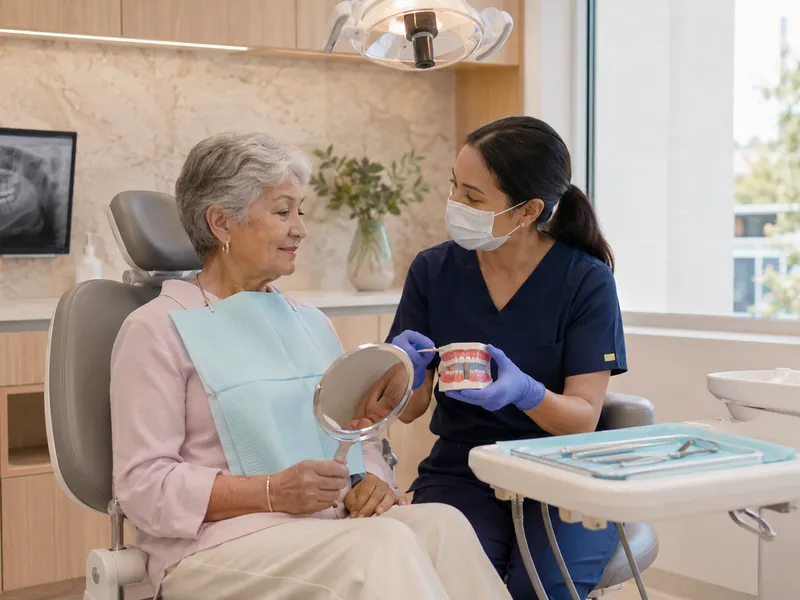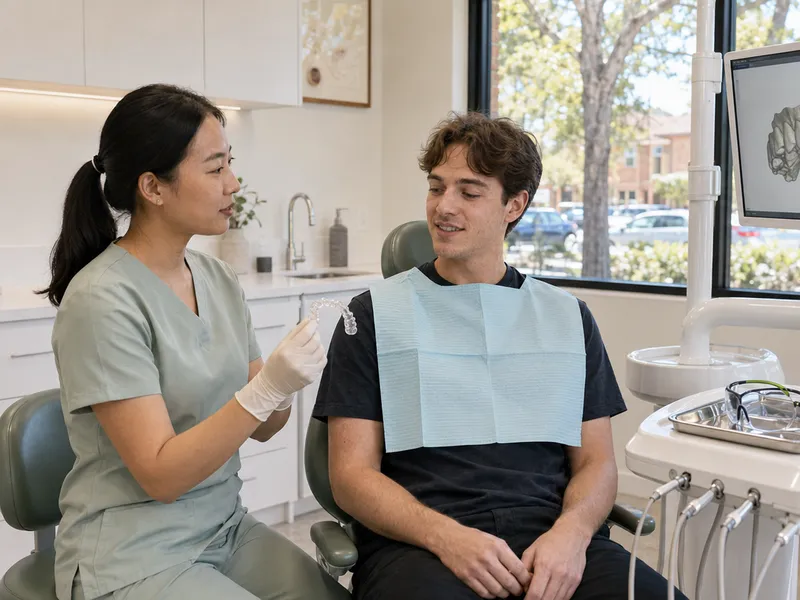
If you are considering Invisalign, the appeal is fairly clear: the aligners are less noticeable than traditional braces, they come out for meals, and they fit more easily around work and social life. What is harder to judge from the advertising is whether they can make the movements you need, how much commitment is involved, and what happens once the last aligner comes out. Invisalign is a branded clear aligner system that uses a planned series of removable, custom-made plastic trays to move teeth gradually, with each tray changed as treatment progresses. This guide brings together patient information from Healthdirect, Australian regulatory sources and the manufacturer's technical explanation of the system to help you ask better questions during a consultation. It is general information only, not dental advice: suitability, risks and likely results require an individual assessment by a registered dental practitioner.
What is Invisalign?
Invisalign is one commercial system within the broader category of clear aligner treatment. A digital treatment plan maps a proposed sequence of tooth movements, and each aligner applies controlled pressure before a new tray continues the process.
Small tooth-coloured attachments may be bonded to selected teeth to help the aligner grip and direct movement, and some plans may involve elastics or other procedures. The trays alone are only one part of the treatment. The manufacturer, Align Technology, explains the mechanics of its system, but that information cannot determine whether treatment is suitable for a particular patient. That requires a clinical assessment.
How Invisalign treatment works
Treatment generally follows the same broad sequence, although the details vary between providers and individual cases.
Assessment and records
The provider examines the teeth, gums and bite and discusses what you hope to change. Digital scans, photographs and X-rays may be taken, and existing decay or gum problems may need attention before tooth movement begins.
Treatment planning
The records are used to plan the movements and prepare a digital simulation. A simulation is a planning tool, not a guaranteed preview of the final result, so ask which changes are considered realistic and whether the plan addresses the bite as well as tooth position.
Receiving the aligners
The first sets of aligners are fitted and checked, and attachments may be placed on the teeth. The provider explains how long to wear each tray, when to change it, and what to do if one is lost, damaged or no longer fits properly.
Reviews and refinements
Progress is reviewed during treatment. If teeth do not track as planned, another scan and extra aligners, often called refinements, may be recommended. Whether refinements are included in the original fee depends on the quote.
Retainers
When active movement finishes, retainers help hold the teeth in their new positions. Retention is not an optional afterthought: teeth can shift over time, so the provider should explain the proposed schedule and the cost of replacement retainers.
Invisalign and traditional braces compared
Neither option is automatically better than the other. Someone who is unlikely to wear aligners as instructed may be better served by a fixed appliance, while another patient may value removability and have a case that responds well to clear aligners.
- Appearance
- InvisalignClear trays with possible tooth-coloured attachments
- Fixed bracesBrackets and wires are visible, although ceramic options are less noticeable
- Eating
- InvisalignAligners are removed
- Fixed bracesSome hard or sticky foods may need to be avoided
- Cleaning
- InvisalignTrays are removed for brushing and interdental cleaning
- Fixed bracesCleaning around brackets and wires takes more care
- Patient involvement
- InvisalignConsistent daily wear is essential
- Fixed bracesThe appliance remains fixed to the teeth
- Treatment range
- InvisalignSuitable for many cases, but not every movement or patient
- Fixed bracesCan manage a broad range of tooth and bite movements
- Breakages and loss
- InvisalignTrays can be lost or damaged
- Fixed bracesBrackets and wires can break or irritate the mouth
| Consideration | Invisalign | Fixed braces |
|---|---|---|
| Appearance | Clear trays with possible tooth-coloured attachments | Brackets and wires are visible, although ceramic options are less noticeable |
| Eating | Aligners are removed | Some hard or sticky foods may need to be avoided |
| Cleaning | Trays are removed for brushing and interdental cleaning | Cleaning around brackets and wires takes more care |
| Patient involvement | Consistent daily wear is essential | The appliance remains fixed to the teeth |
| Treatment range | Suitable for many cases, but not every movement or patient | Can manage a broad range of tooth and bite movements |
| Breakages and loss | Trays can be lost or damaged | Brackets and wires can break or irritate the mouth |
What can Invisalign treat?
Clear aligners may be used for crowding, spacing and some bite problems, but conditions that look similar in the mirror can involve different tooth roots, jaw relationships and treatment risks.
Suitability may be affected by the type and extent of movement required, the relationship between the upper and lower jaws, gum and bone health, missing teeth, implants, crowns or previous dental work, whether other appliances or procedures are needed, the patient's age and stage of dental development, and the likelihood of wearing the aligners consistently. These factors do not always rule treatment out, but a dentist or orthodontist needs to consider them. Dental implants do not move like natural teeth, and existing restorations can also change how attachments or aligners are planned.
Invisalign for adults
Adults can have orthodontic treatment, and there is no single upper age limit. What matters is oral health and whether the planned movement is appropriate. Gum disease, bone loss, worn teeth or extensive restorative work may require additional assessment or coordination with another dental practitioner.
Clear aligners can suit working adults because they are removable and less conspicuous, but they still need to be worn for the prescribed time. Frequent removal for coffee, snacks or social occasions can reduce that wear time and affect progress.
How long does Invisalign take?
Treatment length varies. A limited movement may take months, while more involved tooth and bite correction can take well over a year. The initial estimate can change if aligners are not worn consistently, teeth respond differently from the plan, appointments are missed or refinements are required.
Ask for an expected range rather than a promised finish date, and distinguish active treatment from retention, which continues afterwards.
What does Invisalign cost in Australia?
Published Australian figures for a full course of clear aligner treatment cluster between about $6,000 and $9,500. CostDoc, which collects prices reported anonymously by patients, puts the national median at about $6,275 across 209 reports, with the middle half of those reports falling between roughly $5,300 and $7,200. Orthodontics Australia, writing as a professional body rather than running a survey, guides patients towards $6,500 to $9,500. Limited treatment on the front teeth only is usually lower, around $3,500 to $6,000, and complex cases can run higher.
Treat that band as a floor for the conversation rather than a quote. If a proposal lands well above it, ask what in your case is driving the difference, and expect a written treatment plan that answers the question. Our Invisalign cost guide explains inclusions, health fund benefits and how to compare quotes.
Living with clear aligners
Aligners need to be removed for eating and for drinks other than plain water, unless the treating practitioner advises otherwise. Brush and clean between the teeth before putting them back in where practical, since trapping food or sugary liquid under a tray can increase the time teeth are exposed to it.
Clean the aligners using the method recommended by the provider. Hot water can distort plastic, and toothpaste can be abrasive on some materials. Keep trays in their case when they are out of the mouth rather than wrapping them in a napkin, where they are easily lost.
Mild pressure can occur after changing trays. Severe pain, a sharp edge, an aligner that will not seat, or a tooth that feels unusually mobile should be discussed with the provider rather than managed by forcing the tray.
Finding an Invisalign provider
Clear aligner treatment is available from dentists and orthodontists across Australia. An orthodontist is a dentist with specialist registration in orthodontics, and general dentists may also provide orthodontic treatment within their education, training and competence.
Check any practitioner through the Ahpra register. During a consultation, ask who plans and monitors treatment, how often reviews occur, what happens if the plan changes, and which parts of the fee are included.
Find braces and orthodontics near you
Dentist360 lists practices across NSW, Queensland, the ACT and Melbourne, with opening hours, health funds and accessibility compared side by side.
Frequently asked
That depends on the treatment required, the value placed on removable and less visible appliances, and the ability to wear them consistently. Compare the proposed result, responsibilities, risks, total fee and alternatives rather than deciding from appearance alone.
Pressure and temporary tenderness can occur, particularly after changing aligners. Severe or persistent pain is not something to ignore. Contact the treating provider if an aligner causes injury, does not fit or the discomfort feels unexpected.
Providers often prescribe around 20 to 22 hours of wear each day, but patients should follow their own treatment instructions. Aligners are generally removed for meals, most drinks and oral hygiene.
Aligners are normally removed for eating. Plain water is generally the only drink taken while they are in. Follow the provider's advice, because hot, coloured or sugary drinks can damage or stain trays and expose teeth to sugar or acid.
No. Invisalign is a brand. Other clear aligner systems may use different materials, planning systems, treatment protocols and levels of in-person supervision. Ask which system is proposed and who is responsible for assessment and follow-up.
Sources
This guide is general information, written from the published sources listed below. It is not a substitute for advice from a registered dental practitioner.
Healthdirect Australia, 2025
Dental braces and retainersHealthdirect Australia, 2024
The role of an orthodontistOrthodontics Australia
Clear aligners, do they work as well as braces?Australian Dental Association
Teeth straightening and bracesCHOICE
Orthodontic braces vs aligners, dentists vs orthodontistsCostDoc, 2026
Invisalign cost in Australia, patient-reported pricesOrthodontics Australia, 2019
Clear aligners, how much do they cost in Australia?Orthodontics Australia, 2023
How much do braces cost?CostDoc, 2026
Methodology, how CostDoc collects and publishes price data