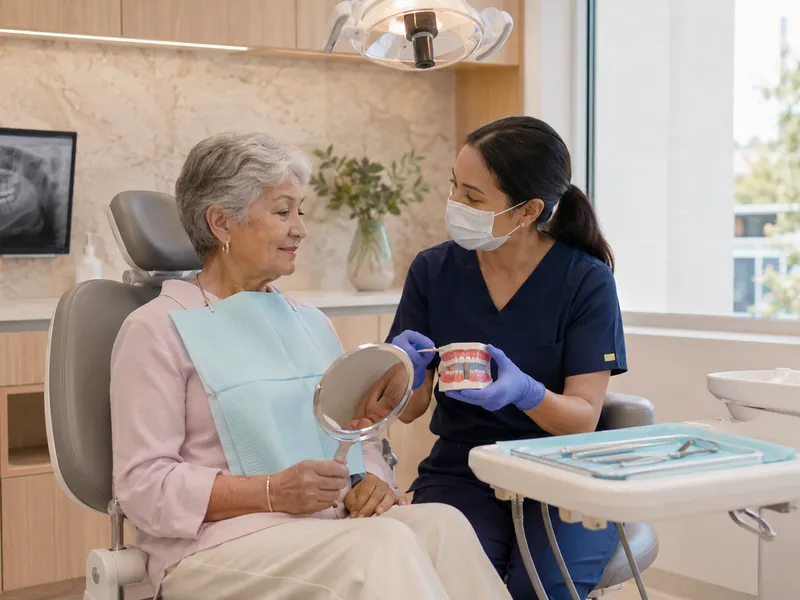
Invisalign and fixed braces both move teeth, but they ask different things of the person wearing them. Clear aligners are removable and less noticeable, while braces stay attached and do not rely on remembering to put trays back in after meals. Neither option is better for every patient, the movements required, bite, gum health, age, routine and willingness to follow the plan all matter more than a simple pros-and-cons score. This is general information only, treatment suitability, risks, timing and likely result require an orthodontic assessment by a registered dental practitioner.
Invisalign and braces compared
The price bands overlap. Cost does not determine which treatment can make the required movement.
- Appearance
- Invisalign or clear alignersClear trays with possible tooth-coloured attachments
- Fixed bracesMetal or ceramic brackets and wires are visible
- Removable
- Invisalign or clear alignersYes
- Fixed bracesNo
- Eating
- Invisalign or clear alignersTrays are removed
- Fixed bracesSome foods can damage brackets or wires
- Cleaning
- Invisalign or clear alignersTeeth can be brushed without trays in place, trays also need cleaning
- Fixed bracesExtra cleaning around brackets and wires
- Daily responsibility
- Invisalign or clear alignersMust be worn for the prescribed time and stored safely
- Fixed bracesRemains attached, but appliance care is still required
- Appointments
- Invisalign or clear alignersReviews and possible refinements
- Fixed bracesReviews and wire or appliance adjustments
- Indicative Australian price
- Invisalign or clear aligners$6,000 to $9,500
- Fixed bracesAbout $5,000 to $15,000 across metal, ceramic and lingual options
- Suitability
- Invisalign or clear alignersCan treat many cases, but not every movement or patient
- Fixed bracesCan manage a wide range of tooth and bite movements
| Consideration | Invisalign or clear aligners | Fixed braces |
|---|---|---|
| Appearance | Clear trays with possible tooth-coloured attachments | Metal or ceramic brackets and wires are visible |
| Removable | Yes | No |
| Eating | Trays are removed | Some foods can damage brackets or wires |
| Cleaning | Teeth can be brushed without trays in place, trays also need cleaning | Extra cleaning around brackets and wires |
| Daily responsibility | Must be worn for the prescribed time and stored safely | Remains attached, but appliance care is still required |
| Appointments | Reviews and possible refinements | Reviews and wire or appliance adjustments |
| Indicative Australian price | $6,000 to $9,500 | About $5,000 to $15,000 across metal, ceramic and lingual options |
| Suitability | Can treat many cases, but not every movement or patient | Can manage a wide range of tooth and bite movements |
What can each option treat?
Clear aligners can address many types of crowding, spacing and bite concerns. Attachments, elastics and other procedures may form part of the plan, and fixed braces use brackets and wires, sometimes with additional appliances.
Some cases can be treated with either approach. Others may be more predictable with one method or need a different treatment altogether, and only individual records can answer the suitability question for a specific case.
Cost comparison
Drawing on published price guides and patient-reported data, the broad ranges are about $6,000 to $9,500 for Invisalign or comparable clear aligners, $5,000 to $9,000 for metal braces, $6,000 to $9,500 for ceramic braces and $9,000 to $15,000 for lingual braces. Retainers are often charged separately, so ask for that figure in writing rather than assuming it is inside the total.
The two published sources do not fully agree. Orthodontics Australia, as a professional body, guides patients towards the upper part of each band, while CostDoc, which collects prices reported anonymously by patients, publishes medians nearer the middle: about $6,275 for clear aligners, $5,814 for metal braces, $6,789 for ceramic and $10,435 for lingual. Neither is a fee schedule, because Australia does not publish one for orthodontics.
The useful thing about knowing the range is that it tells you when something is unusual. If a quote lands well outside these bands, ask what about your case explains it, and expect a written treatment plan rather than a verbal reassurance. When comparing, check scans, appliances, reviews, additional aligners, repairs, removal and retainers. A low starting price may describe limited aligner treatment rather than a full course.
Daily life with each treatment
Aligners are removed for food and most drinks, while fixed braces stay in place and the provider may advise avoiding foods likely to break or dislodge the appliance.
Aligners allow normal access to tooth surfaces when removed, but the trays need cleaning and teeth should be clean before they are replaced. Braces require care around brackets and wires, and the provider should demonstrate the tools and method for either appliance.
Aligner treatment depends on wearing trays for the prescribed time, and lost or damaged trays can interrupt the plan and may cost extra. Braces do not depend on removal and replacement by the patient, but brackets and wires can break and need attention.
Clear aligners are less noticeable but not invisible, attachments and elastics may be visible, and speech can change temporarily. Ceramic braces reduce the contrast of brackets but still use a fixed appliance.
Children, teenagers and adults
Age alone does not decide the appliance. For a younger patient, dental development, the problem being treated and ability to manage removable trays all matter, while an adult may have restorations, implants, gum concerns or previous orthodontic treatment that affects planning.
Parents should ask what happens if aligners are not worn enough, how lost trays are handled and whether a fixed option would reduce that particular responsibility. Adults should ask how work, travel and existing dental treatment fit into the plan.
Dentist or orthodontist?
Both dentists and orthodontists may provide orthodontic treatment within their training and competence. An orthodontist is a dentist with recognised specialist registration in orthodontics.
Check the provider in the Ahpra register and confirm specialist status through the Dental Board. Ask who diagnoses, plans, reviews and manages problems during treatment.
Questions to ask at a consultation
At a consultation, it is worth asking what tooth and bite movements are being planned, whether either fixed braces or aligners could achieve the goal, what the limitations of each option are in this case, what happens if aligners are not worn as planned, whether refinements, breakages and replacement trays are included, how long retention is expected and what it costs, and who provides treatment and what their registration is.
Find braces and orthodontics near you
Dentist360 lists practices across NSW, Queensland, the ACT and Melbourne, with opening hours, health funds and accessibility compared side by side.
Frequently asked
No option is better for everyone. Invisalign may suit someone who values removability and can follow the wear schedule. Fixed braces may suit different movements or someone who prefers an appliance that stays in place.
Not always. The indicative ranges overlap. Lingual braces can cost more than many aligner plans, while limited aligner treatment may cost less than a full braces course.
There is no reliable general winner. Time depends on the movements, starting position, biology, appliance and how closely the plan is followed.
No. They are less noticeable than metal braces, but trays, attachments and elastics may still be seen.
Retention is generally part of orthodontic treatment after active tooth movement. Ask which retainer is proposed, how long it is worn and whether replacements are included.
Sources
This guide is general information, written from the published sources listed below. It is not a substitute for advice from a registered dental practitioner.
CHOICE
Orthodontic braces vs aligners, dentists vs orthodontistsHealthdirect Australia, 2025
Dental braces and retainersHealthdirect Australia, 2024
The role of an orthodontistAustralian Dental Association
Teeth straightening and bracesOrthodontics Australia
Clear aligners, do they work as well as braces?CostDoc, 2026
Invisalign cost in Australia, patient-reported pricesCostDoc, 2026
Metal braces cost in Australia, patient-reported pricesCostDoc, 2026
Ceramic braces cost in Australia, patient-reported pricesCostDoc, 2026
Lingual braces cost in Australia, patient-reported pricesCostDoc, 2026
Methodology, how CostDoc collects and publishes price dataOrthodontics Australia, 2023
How much do braces cost?